How to Trade Nasdaq-100 Index Options

The Nasdaq-100 Index is comprised of 100 of the largest domestic and international non-financial companies listed on the Nasdaq Stock Market based on market capitalisation.
While ETFs and Mutual Funds are common ways to invest in the Nasdaq-100, the Nasdaq-100 Index Option provides an alternative way to gain exposure to some of the world's leading companies.
How to Trade Nasdaq-100 Index Options
The Nasdaq-100 Index Option contract has an underlying value equal to the full value of the level of the Nasdaq-100 Index. The Nasdaq-100 Index Option trades under the symbol NDX and has a contract multiplier of USD100[MOU3] . [EW4] [JH5]
For Index Options trading on Webull, there are five strategies supported:
To profit from a price rise/drop in the index with a bullish/bearish outlook:
- Long Call strategy
- Long Put strategy
To profit from the underlying security price moving significantly out of a specific range, but unsure of which direction the move will take:
- Long Straddle strategy
- Long Strangle strategy
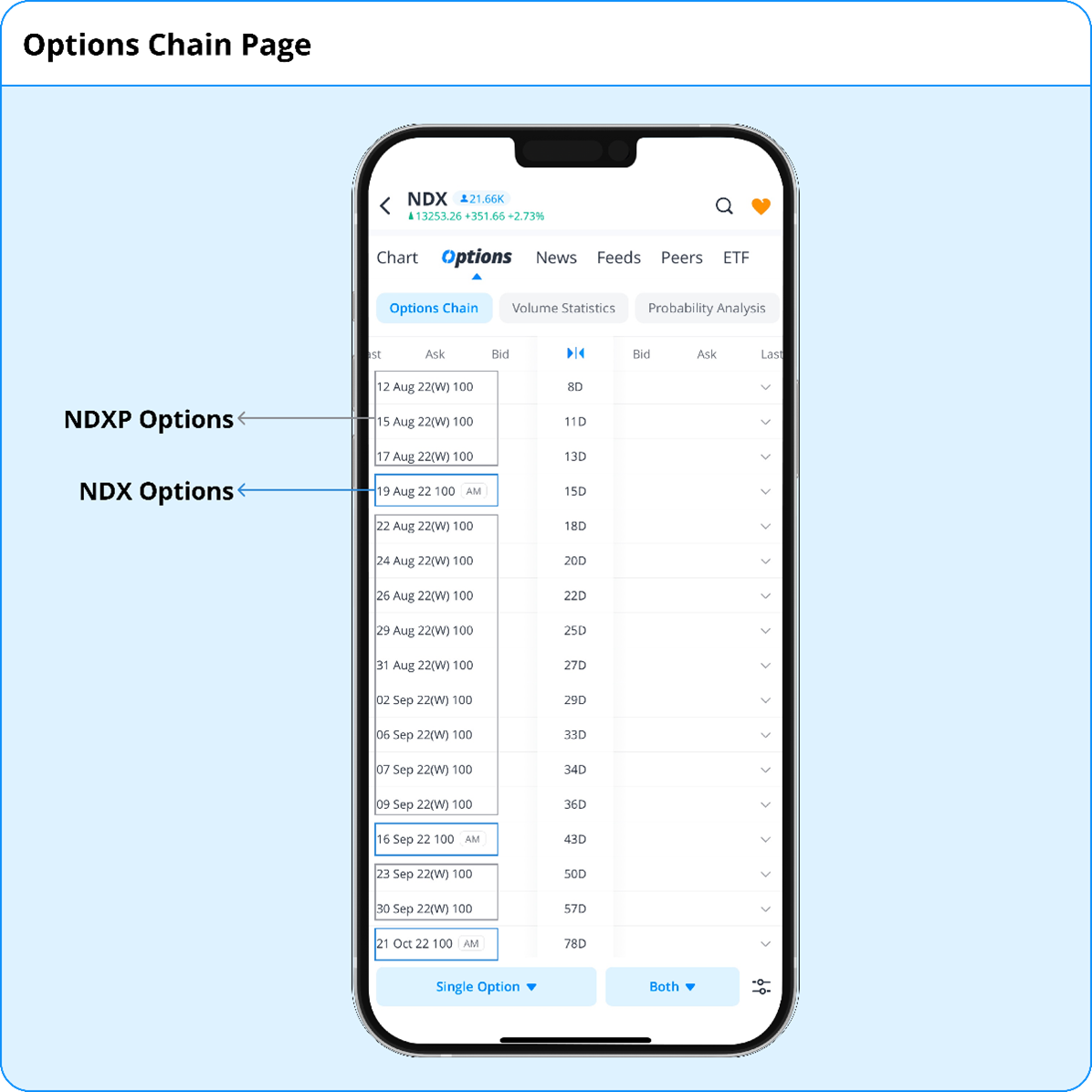
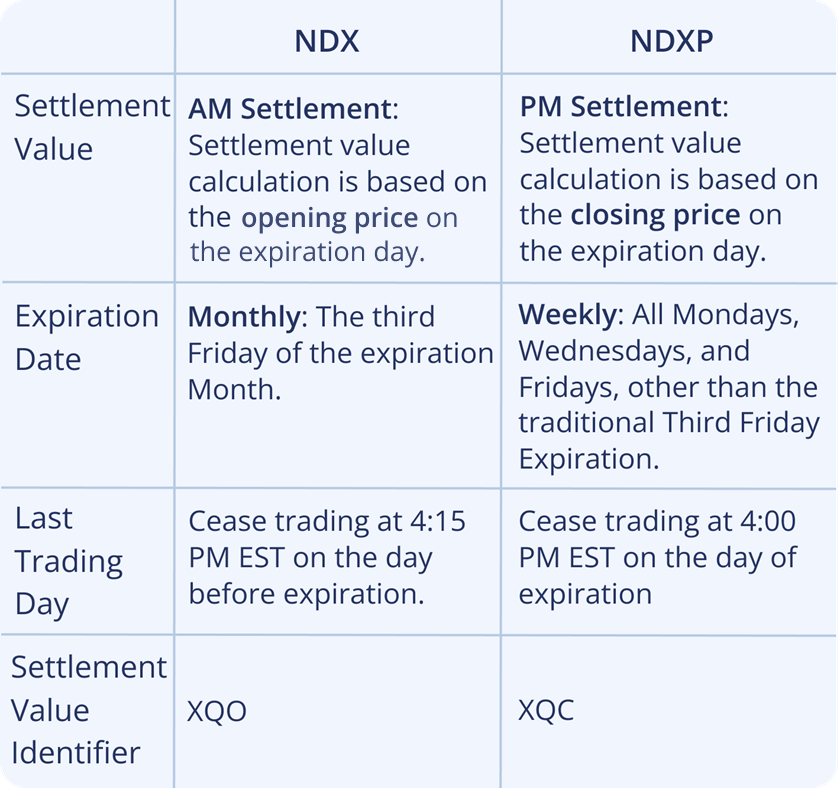
Entering an Index Option order on Webull is similar to entering an order for stock options. After you enter the options chain page, you will find that the options contracts are grouped into NDX and NDXP. So, what are the differences between the two?
NDX AM Settlement vs. NDXP PM Settlement
Pros and Cons
Nasdaq-100 options are options on the actual index value, so they are slightly different from traditional options on the popular Nasdaq-100 ETF (such as Invesco QQQ Trust). These differences can make NDX/NDXP options useful.
The Advantages of Index Options
- Cash-settled
Index Options are "cash settled" against a final settlement value for the index. Cash is delivered instead of the asset to execute and finalise an Index Option contract. The cash settlement makes it easier to manage options positions. For example, someone with a Call Option does not have to worry about making payment, taking delivery, or deciding to keep or sell the stock.
- European style
Most equity/ETF options are American style, meaning they can be exercised at any point before expiration. European style option contracts can only be exercised on the expiration date by contrast. Index Options are settled in the European style.
But what does this difference really mean for investors? Aside from the styles being relatively similar, one of the key differences is that the American style option can be priced at a higher premium than the European style. This is because sellers take on more risk by not knowing when a buyer might decide to exercise their contract.
Lower Volume Statistics
Trading volume helps investors understand the liquidity of an options contract. Compared to the QQQ option, one clear drawback of NDX Index Options is the lower volume statistics.
Suppose an option has a higher trading volume. In that case, that means there are currently a large number of contracts actively changing hands. That will make it easier for an investor to open or close a position to obtain a favourable price.
Therefore, the lower liquidity in trading NDX Index Options may incur a higher implicit transaction cost.

All Comments