How to start finance management from Zero?

Stage 1: Beginner Stage
1) Improve control over your income and expenses and develop an allocation mindset.
The idea of allocation is to clearly define your financial goals and allocate your funds accordingly. A typical allocation approach is the "Four Money Jars" concept, which includes managing liquid cash, stable investments, long-term investments, and insurance protection. You can start with the steps below:
a. Create a budget: Begin by outlining your income sources and listing all your expenses. Categorize your expenses into essential (e.g., rent, utilities, groceries) and non-essential (e.g., entertainment, dining out). Allocate a specific portion of your income to each category based on your priorities.
b. Track your expenses: Monitor your spending regularly to ensure you stay within your budget. Use a budgeting app or spreadsheet to record your expenses and categorize them accordingly. This will give you a clear understanding of where your money is going and help identify areas where you can cut back.
c. Prioritize savings: Set aside a portion of your income for savings. It's crucial to have an emergency fund that covers at least three to six months of living expenses. Additionally, consider long-term goals such as retirement or buying a home and save accordingly. You can use RSP to help you save money
2) Learn the basic principles of finance and investment knowledge.
a. You can start with reading books and educational resources: Start by reading books on personal finance, investing, and basic financial principles. For example, understanding compound interest, interest rates, the concept of assets and liabilities, the relationship between risk and return, etc. This will help establish a correct investment mindset.
b. Follow finance and investment blogs: Subscribe to popular finance and investment blogs to stay updated with the latest news and trends in the industry.
c. Join online communities and forums: Engage with online communities and forums dedicated to finance and investment. Participating in discussions, asking questions, and sharing experiences with like-minded individuals can enhance your learning and provide new perspectives. Webull community has investors from all over the world, enjoy sharing with them now.
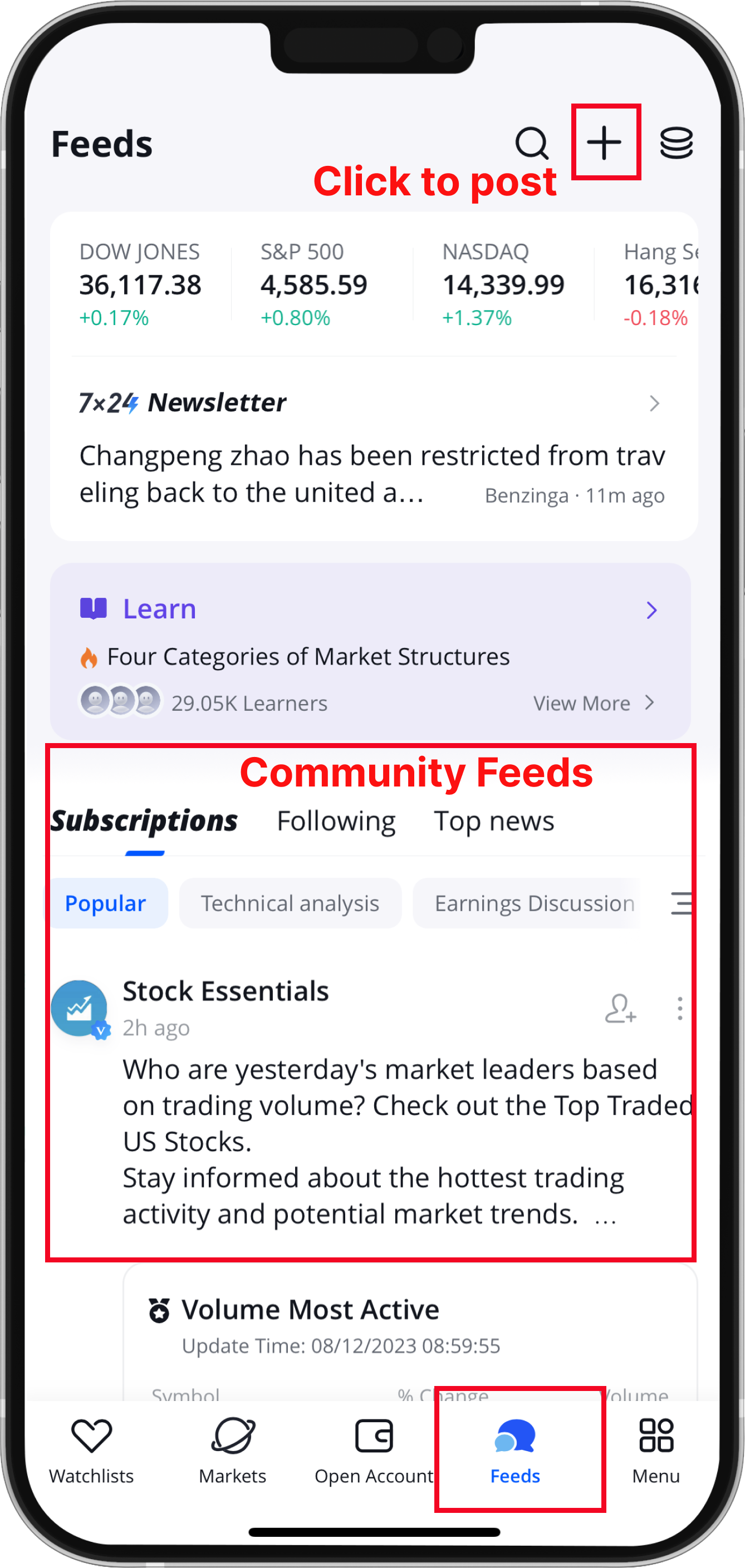
d. Practice with paper trading: Paper trading, allows you to practice investing without risking real money. This can help you understand the principles of stock market investing, how to analyze stocks and track your performance.
Stage 2: Advancement
1) Develop your own investment logic.
In this stage, deepen your knowledge of investment practices and gain practical experience. You can choose to invest in ETFs or stocks, or try various investment methods such as medium to low-risk financial products, or direct stock investment.
2) Cultivate your investment mentality.
An important lesson in this stage is to experience losses. In most cases, this is unavoidable unless you consistently avoid high-risk investments. When facing losses, a calm mindset helps to recognize that investment is a continuous learning process with no fixed outcomes, only long-term vague possibilities of being right.
Stage 3: Learning is an Endless Journey
Those who reach this stage are often seen as "gurus" or even "investment gods" with remarkable performance in different market cycles. Continuing to read widely and think deeply remains essential and becomes increasingly important compared to actual trading. It is helpful to learn from experienced investors and listen to their perspectives, and stay engaged in the investment world, as it will expose you to various market fluctuations.
Each market change can be seen as an opportunity to test your own logic. Regardless of whether it's an increase or decrease in value, aim to reflect on and gain insights from every experience. Remember, consistency and discipline are key. Start today, stay committed, and gradually watch your financial goals materialize.
