What is an ETF?

Some people think buying individual stocks is too risky. Others find mutual funds too expensive. An ETF is something in between.
Takeaways
- An ETF is a basket of investments that trade like stocks.
- If applicable, it may pay dividends.
- ETFs can help you to build a diversified portfolio at a low cost.
What is an Exchange Traded Fund (ETF)?
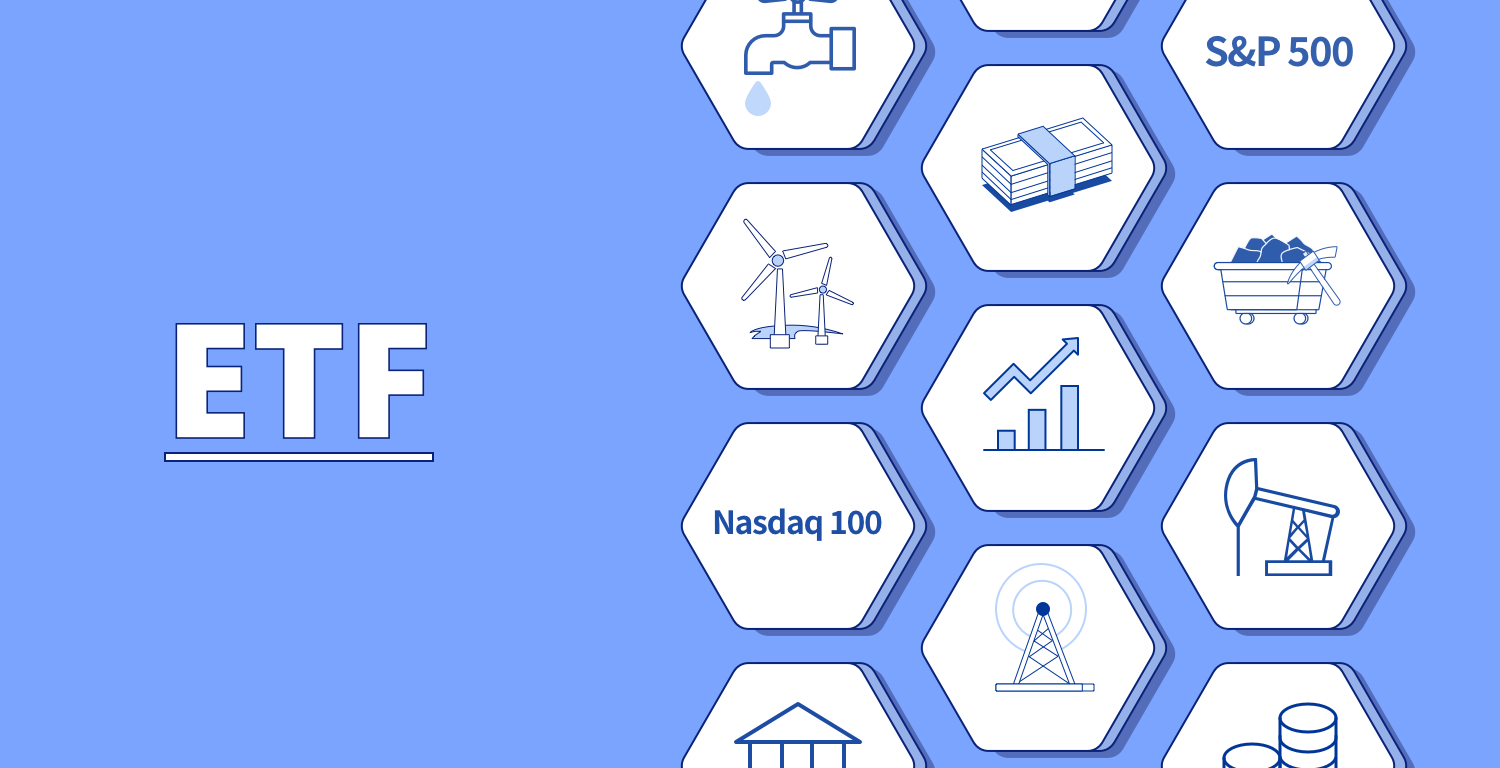
An ETF is a basket of investments like stocks, bonds, futures, etc. It enables you to invest in a broad stock market, a specific industry or sector, currency, or commodity.
ETFs are structured just like mutual funds. However, most ETFs track an index and are passively managed. In this way, the expense ratio of ETFs is usually much lower than mutual funds.
How does an ETF trade?
ETFs trades just like stocks. Anything you can do with stocks; you can do with ETFs.
- You can trade ETFs throughout the day.
- You can place any type of order for ETFs.
- You can short an ETF.
- You can even trade options on some ETFs.
The value of an ETF is calculated every trading day after market close, based on the closing prices of the securities in its portfolio. This is known as the Net Asset Value (NAV).[LS1]
The NAV is determined by adding up the value of all assets in the fund, including assets and cash, subtracting any liabilities, and then dividing that value by the number of outstanding shares in the ETF.
ETFs usually trade at a price close to the NAV, but are affected by demands in the market. When demand is high, ETFs trade at a premium to (a higher price than) the NAV. Conversely, when demand is low, ETFs trade at a discount to (a lower price than) the NAV.
Do ETFs pay out dividends?
An ETF that receives dividends from its portfolio must pass the dividends to investors of the fund.
However, an ETF does not pay dividend payments immediately when it receives them. Most ETFs pay a quarterly dividend. Like stocks, investors should buy the ETF before the ex-dividend date to receive dividends.
Dividend-paying ETFs are usually characterised by their names. Type "dividend" to search for dividend-paying ETFs.
Why invest in ETFs?
ETFs are suitable for investors who want to build a diversified portfolio with low costs. You may want to buy ETFs for the following reasons:
- Diversification. Through an ETF, you can hold hundreds or even thousands of securities. This spreads out your risk compared to owning just a handful of individual securities.
- Trading flexibility. You can trade ETFs any time of the day. This is different from other types of funds, which are usually redeemed at the end of the day. Moreover, you can place any type of order the same way you would trade stocks.
- Low costs. Just like stocks, you can trade ETFs commission-free* on Webull. Additionally, the expense ratios of ETFs are usually much lower than mutual funds due to the passive management style.
What are the risks to consider?
ETFs trade like stocks, so they carry similar risks.
- Liquidity. Not all ETFs are highly liquid. Some ETFs that track less-known industries may have few buyers and sellers in the market. It may take a longer time for such an order to settle. Market orders may also end up settling at an unexpected price (large bid-ask spread).
- Downturn risks. The price of an ETF follows the price movement of its portfolio. Although a broad market index is unlikely to show volatility as great as a single security, the risks could be amplified with 2x or 3x leverage.
- Diversity: Buying an ETF does not necessarily mean building a diversified portfolio. Sector ETFs track a specific industry. If you want to build a diversified portfolio with sector ETFs, buying one ETF does not enable you to achieve your investment goal.

All Comments